Title here
Summary here
Intake
An intake is the part of your robot that picks up or collects game objects — like balls, discs, cubes, or rings. Before your robot can score, it first needs to grab the game piece! Choosing the right intake design can make your robot fast and efficient, or slow and frustrating to use.
Why does this matter?
The intake is often the difference between a robot that scores many points and one that struggles to collect pieces at all. A well-designed intake works quickly, reliably, and does not jam.
Compression
Almost every intake design relies on a key idea called compression. Game pieces are rarely perfectly rigid, and intakes are not perfectly rigid either. To grab an object without jamming, the intake needs to squeeze the object slightly — pressing against it from both sides.
This squeezing creates friction, which is what allows spinning wheels or rollers to pull the object into the robot. Think of it like squeezing a ball between your palms — you can spin your hands and the ball moves with them.
Roller / Conveyor Intakes
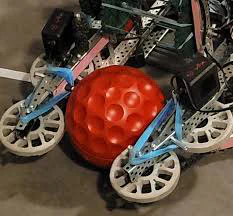
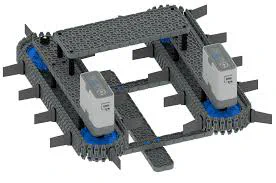
A roller intake uses one or more spinning shafts with rubber wheels, silicone rollers, or tread flaps. When the robot drives toward a game piece, the spinning rollers grab it and pull it up and into the robot.
Flex Wheel Intakes
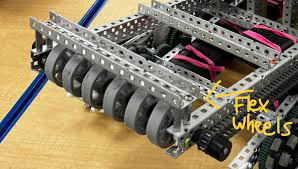
A flex wheel intake is a variation of the roller intake using flexible rubber wheels or rubber flaps on a spinning axle.
Claw Intakes
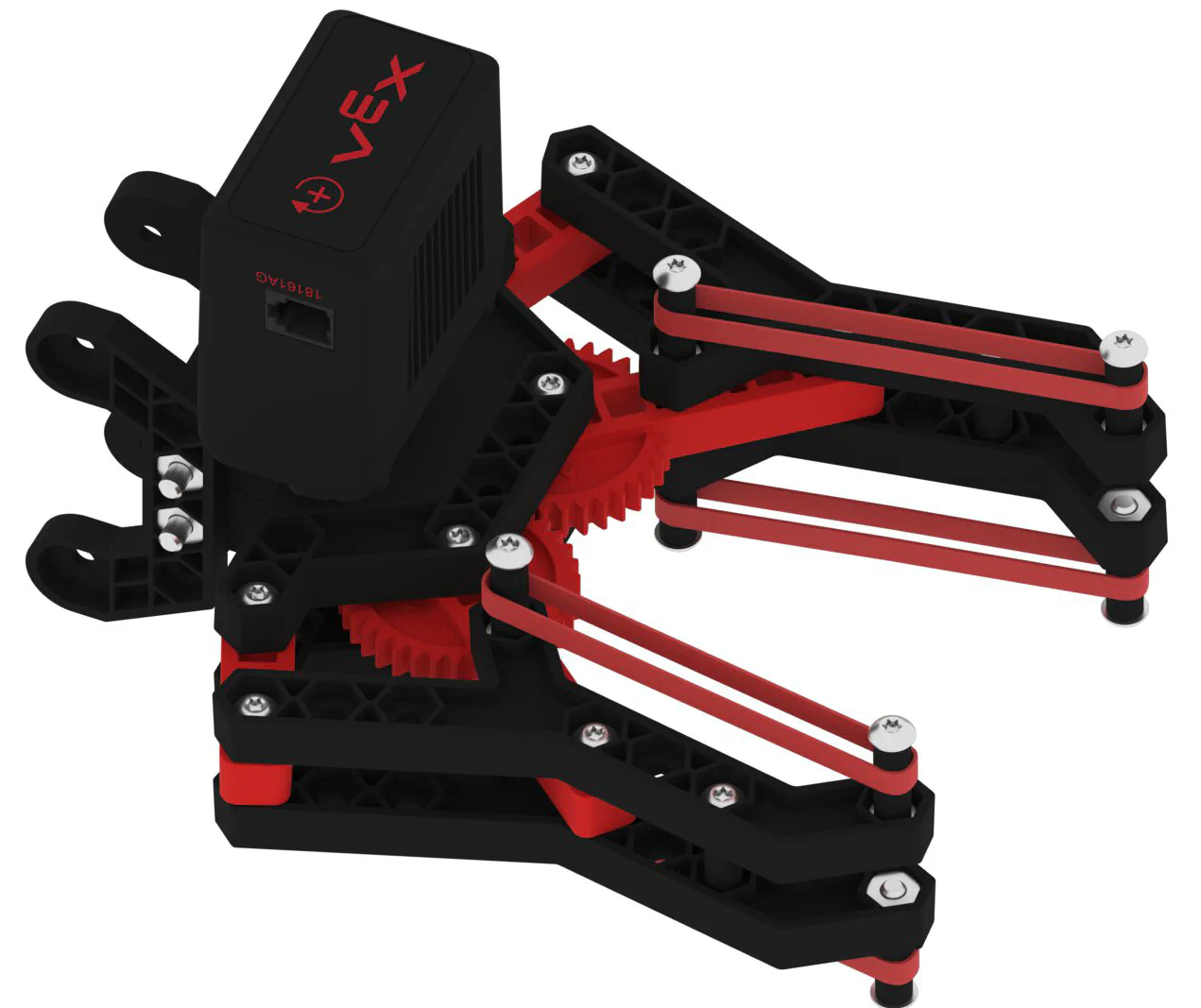
A claw intake uses mechanical arms powered by a motor or pneumatic piston to physically pinch and grip a game object.
Passive / Wedge Intakes
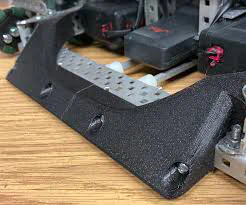
This type of intake uses no motors at all! It relies entirely on the robot’s forward speed and a wedge or ramp shape to scoop objects in.
Comparison Table
| Intake Style | Speed | Object Capacity | Ease of Use | Motor Cost | Best Use Case |
|---|---|---|---|---|---|
| Roller Conveyor | 🟢 Very Fast | 🟢 High (Multiple) | 🟡 Medium | 🔴 High | Small balls, disks, rapid cycling |
| Flex Wheel/Flap | 🟢 Fast | 🟢 High (Multiple) | 🟢 Very High | 🟡 Medium | Rings, cubes, objects on the floor |
| Passive/Wedge | 🟡 Medium | 🟡 Medium | 🔴 Low | 🟢 No Motors | Pushing objects into goals |
| Claw | 🔴 Slow | 🔴 Low (Usually 1) | 🔴 Low | 🟡 Medium | Large cubes, heavy or unique game objects |
Each game is different, and the best intake depends on the shape, size, and location of that game’s pieces. There are many variations of these intake types that can be combined or adapted for specific challenges!